
The question of who invented the computer does not have a single, simple answer. The modern computer is the result of a long evolution of ideas, inventions, and refinements by many brilliant minds over centuries. However, in the context of electronic digital computers, several key figures and their landmark machines stand out as foundational to the technology we use today.
Early Conceptual Foundations
The theoretical groundwork was laid by mathematicians like Charles Babbage (1791-1871), an English inventor. In the 19th century, he designed the Analytical Engine, a mechanical, general-purpose computer. Although never built in his lifetime, its design incorporated concepts fundamental to modern computing: an arithmetic logic unit, control flow through conditional branching and loops, and integrated memory. Ada Lovelace, who wrote algorithms for the proposed Analytical Engine, is often celebrated as the world's first computer programmer.
The Advent of Electronic Computing
The first fully electronic, programmable, digital computers emerged in the 1930s and 1940s.
- Konrad Zuse (Germany): Built the Z3 in 1941, considered the world's first working programmable, fully automatic computer. It used electromechanical relays.
- John Atanasoff and Clifford Berry (USA): Developed the Atanasoff-Berry Computer (ABC) between 1937 and 1942. It was the first to use binary digits, electronic switching, and a separation of processing and memory, though it was not programmable in the general sense.
- Alan Turing (UK): Provided the crucial theoretical framework with his concept of the Turing Machine (1936), a model for computation and algorithms. During WWII, he was pivotal in cracking the Enigma code using computational devices at Bletchley Park.
- The ENIAC Team (USA): Often cited as the first general-purpose electronic digital computer was ENIAC (Electronic Numerical Integrator and Computer), unveiled in 1946. It was created by J. Presper Eckert and John Mauchly at the University of Pennsylvania. ENIAC was Turing-complete, programmable, and vastly faster than its electromechanical predecessors.
A later court ruling in 1973, however, recognized that Eckert and Mauchly's work derived from concepts pioneered by John Atanasoff.
The Stored-Program Architecture
A critical leap was the stored-program concept, where instructions are stored in memory alongside data. This architecture, foundational to all modern computers, was described in the First Draft of a Report on the EDVAC (1945) by the mathematician John von Neumann. The first computers to implement this design were built in the UK: the Manchester Baby (1948) and EDSAC (1949).
Why This History Matters for Computer Technology Training
Understanding this lineage is more than academic; it provides crucial context for modern learning:
- Appreciation of Abstraction: From physical vacuum tubes to transistors, integrated circuits, and today's cloud platforms, computing constantly abstracts complexity. Training teaches you to work effectively at your chosen level of abstraction.
- Fundamental Principles: The core architecture—input, processing, memory, output, and stored programs—remains unchanged. Quality training grounds students in these enduring principles, not just fleeting tools.
- Problem-Solving Legacy: Computing was born from solving immense problems (ballistics, code-breaking). Modern training continues this tradition, focusing on algorithmic thinking and logical decomposition.
- Rapid Evolution: The field's history shows relentless change. Effective training emphasizes learning how to learn, adaptability, and core concepts that outlast specific programming languages or frameworks.
Conclusion
The computer was not invented by one person but was pioneered by a series of innovators: from Babbage's mechanical vision, through Atanasoff and Berry's electronic prototype, to the practical realization by Eckert, Mauchly, and the theoretical contributions of Turing and von Neumann. For anyone pursuing computer technology training, this history underscores that you are learning a dynamic, principled discipline built on a century of profound intellectual achievement. The goal of training is to equip you not just to use today's technology, but to understand its foundations and contribute to its future evolution.

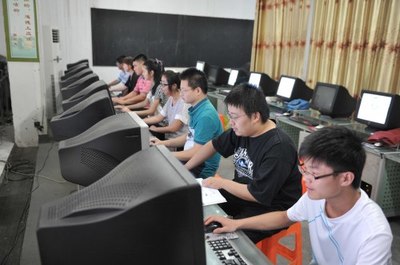
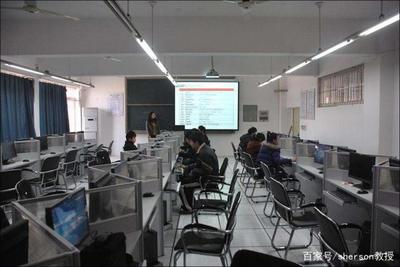

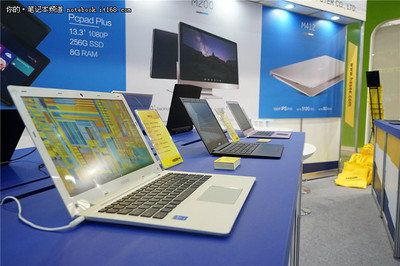 聚焦電腦展 神舟攜多款新品重磅來襲,計(jì)算機(jī)技術(shù)培訓(xùn)領(lǐng)域或?qū)⒂瓉硇伦兏?/span>